Starts & transitions
Before full oil-film separation is established — and through rapid load changes — the engine passes through mixed and boundary lubrication. That is exactly where metal meets metal.

A measured fuel, emissions and engine-protection program for commercial vessels — built on 27+ years of DM-X EngineProtector™ field history, and proven on your own operating data under a protocol you approve.
Vessel photograph: Rinson Chory / Unsplash
The operating reality
Fuel remains the largest controllable voyage cost, and the most volatile. A single percentage point of normalized consumption, multiplied across hours, voyages and a fleet, is real money — every year.
And the audience has grown. Charterers, cargo interests, financiers and regulators now read your consumption and carbon-intensity numbers the way they read your accounts. The game is improving them without trading away machinery protection, seaworthiness, or schedule reliability.
One controlled onboard program connects efficiency, emissions, and engine protection.
Before full oil-film separation is established — and through rapid load changes — the engine passes through mixed and boundary lubrication. That is exactly where metal meets metal.
Propulsion engines run thousands of hours a year at demanding pressure and temperature. The lubricant film is all that separates loaded surfaces — and it is thinnest precisely when loads peak.
The compression ring and cylinder liner is the engine's hardest-working friction pair — and the practical focus for wear monitoring and fuel-performance evaluation.
For operators, reliability is commercial. Maintenance, spares, labor, off-hire — an engine that stays healthy keeps a vessel earning.
The marine technology package
A DM-X marine program is assembled from three coordinated elements, selected only after technical review of your vessel, engines, fuel, lubricant and operating profile. The review decides what goes in. The data decides what stays.
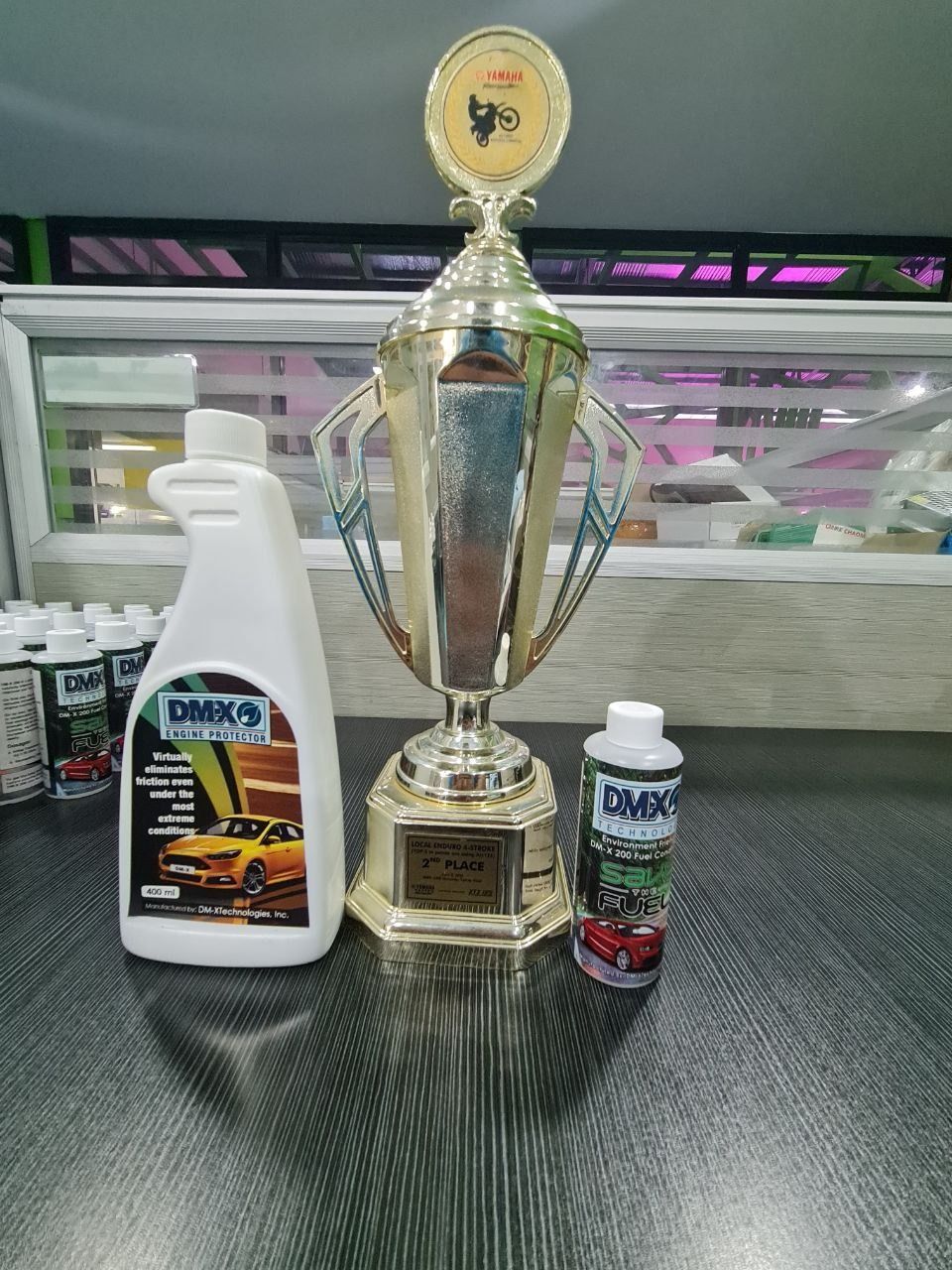
The flagship — a proprietary alkaline, extreme-pressure engine-oil supplement that reinforces protection where loads are highest and oil films are thinnest. 27+ years in continuous field use with operators worldwide.
1999 Product of the Year · Hart's Lubricants World
A controlled fuel-treatment evaluation using the DM-X formulation matched to your marine fuel and engine. What it does to consumption and exhaust shows up in your own logs, under the agreed protocol — not in a brochure.
Where the application calls for it, enhanced filtration and disciplined oil analysis keep soot, contaminants and wear debris under control. Equipment choices and any drain-interval decision are made on your engine's data — with you, not for you.
Fuel
Normalized by duty — per nm, tonne-mile, hour or kWh
CO₂
Computed from your verified fuel figures
Exhaust
Measured where the protocol specifies
Oil
Condition and wear, trended across the trial
The package works alongside correctly specified fuel and lubricant, OEM requirements, filtration, maintenance and oil analysis — never instead of them, and never in place of the repair a tired engine actually needs.
Engine protection — the flagship
EngineProtector uses proprietary additive technology to reinforce the oil's protective film as operating conditions push toward mixed and boundary lubrication — adding extreme-pressure protection at heavily loaded surfaces and contributing to the oil's alkaline reserve, in one treatment.
Protection that stays in place when conditions challenge full hydrodynamic separation.
A defensive layer at heavily loaded surfaces, where metal-to-metal contact does its damage.
TBN contribution to the circulating oil, managed through an oil-analysis-led program.
The formulation has stayed proprietary for 27 years. The evidence doesn't have to be — your trial produces before-and-after data from your own engine.
Application pathways
Every candidate engine is screened before treatment — OEM requirements, lubricant specification, warranty position, oil-consumption behavior, duty profile — and confirmed in writing. Compatibility is our first deliverable, not your risk to carry.
The strongest first candidates are mechanically sound trunk-piston and comparable marine diesel propulsion engines with reliable logs, stable instrumentation, and a known lubricant history. If your engine isn't a strong candidate, we'll tell you — and explain why.
Ocean-going or inter-island trade — evaluate by voyage, distance, cargo work and engine output.
Fixed inter-island routes and schedules make the cleanest before-versus-after comparisons.
Segment idle, transit, maneuvering and work — no misleading averages.
DP and auxiliary demand stay inside the measurement boundary.
Controlled onboard evaluation
You shouldn't take a fuel-saving number from a supplier's website on faith — we wouldn't either. So we don't ask you to. One engine. A pre-agreed protocol, comparable duty, disciplined records, and a decision gate set before treatment begins. If the numbers move, you'll know exactly how much and why. If they don't, you stop — and you keep the cleanest baseline that engine has ever had.
Engine configuration, sump volume, oil type, oil consumption, filtration, engine condition, OEM requirements, warranty position, application protocol — confirmed in writing before a single litre goes in. Issues get caught at the desk, not in the engine room.
Where the application supports it, commercial structures can be performance-contingent — including no-cure-no-pay. Eligibility, test costs, success criteria and consequences are set out in the executed term sheet, test protocol and definitive agreement. We're comfortable committing to that, because the data is the whole argument.
Nothing on this page constitutes an offer or creates any obligation — signed documents govern.
We select a mechanically sound engine with reliable logs, stable instrumentation, a known lubricant history, and a duty profile that can be compared.
We agree the baseline window and record fuel, hours, load, oil condition, temperatures, pressures, wear metals, maintenance events, and operating context — and who records, validates, and signs off every figure, so nobody argues about the numbers afterward.
Treatment goes in at the current approved DM-XTech dosage and procedure. Large engines get an application-specific plan, calculated for the sump.
Same measurement methods, same discipline. Weather, cargo, speed, route, fuel quality, and interventions all get documented — so confounders can't hide a result.
Proceed, extend, or stop — measured against the decision rule agreed in advance, not against impressions. Fleet rollout follows a technically valid result. The call is yours; we stand behind the data.
Scenario model
A sizing tool, not a promise. Enter your fleet's numbers, set the improvement you'd need to justify a decision, and see what it's worth per year — in fuel and in CO₂. The trial's job is to tell you whether your engines clear the bar. Run it at 1% first — on a commercial fleet's fuel bill, one percent is already serious money.
Annualized scenario
Evidence framework
Fuel numbers alone can mislead — route, speed, weather, cargo, and load all move consumption. A credible trial reads normalized consumption together with emissions, condition and maintenance evidence. This is the framework we run every evaluation on.
Technical and governance
The DM-X program works alongside sound engineering — never instead of it. Operators who get the best results run it inside a disciplined lubrication and maintenance regime. Here's what that means in practice.
The products supplement the correct engine oil. They don't replace the oil, the filtration, the maintenance schedule, the condition monitoring — or the repair a tired engine actually needs.
OEM requirements, lubricant spec, warranty status, oil consumption, treatment protocol — reviewed and confirmed before anything goes in the sump.
Oil-drain or lubricant-life extensions are decided on recurring oil analysis and OEM considerations, documented like any engineering decision. If the data doesn't support it, it doesn't happen.
Earlier DM-XTech materials reference a treatment of approximately 10% of engine-oil volume. For large marine engines and specialized lubrication systems, that number is a starting point — we calculate an application-specific dosage against your sump volume and issue it with the current approved product label, technical data sheet, and application guide. Retail packaging never gets scaled up without technical review.
No — and any additive supplier who does should be shown the gangway. Results depend on engine condition, duty, loading, route, weather, fuel, and measurement quality. What we commit to is the method: agreed KPIs, a clean baseline, and a go/no-go rule you control. Your engine either clears the bar or it doesn't — and you'll know which.
Often, yes — including no-cure-no-pay structures where the application supports them. Eligibility, test costs, success criteria and payment consequences are defined in the executed term sheet and test protocol before anything is committed: no surprises, in either direction. We publish offers in signed documents, not on websites — but we're genuinely comfortable letting the data decide.
Indirectly, and honestly: CO₂ is computed from your own verified fuel figures, so every litre your engines stop burning shows up in the numbers that charterers, financiers and regulators actually read. We don't promise ratings — we help you measure, and improve, what drives them.
No. EngineProtector is an oil supplement, not a mechanic. Mechanical defects need diagnosis and repair — and our screening call is designed partly to catch them before they contaminate a trial.
The opposite — oil analysis is the backbone of this program. Wear metals, TBN, viscosity, contamination: it's how the trial speaks. We build the evaluation around it, and any lubricant-life decision runs through it.
The formulation is proprietary, and has been for 27 years; safety information is in the applicable Safety Data Sheet. But you're not asked to trust chemistry you can't inspect — you're asked to trust data from your own engine.
It follows your trading pattern, and we'll agree the window on the screening call. Auxiliary engines with parallel gensets usually produce the cleanest comparison in the shortest time; main propulsion needs a longer window over comparable duty.
Talk to an engineer
Start with a 30-minute technical call — bring your engine make and model, nothing else. We'll screen the candidate, draft the trial protocol, and open the 27-year testimonial file for you. The protocol is yours to keep, whether or not you ever treat a drop.
Your brief will be sent securely to our email for review. Please complete all required fields before submitting.